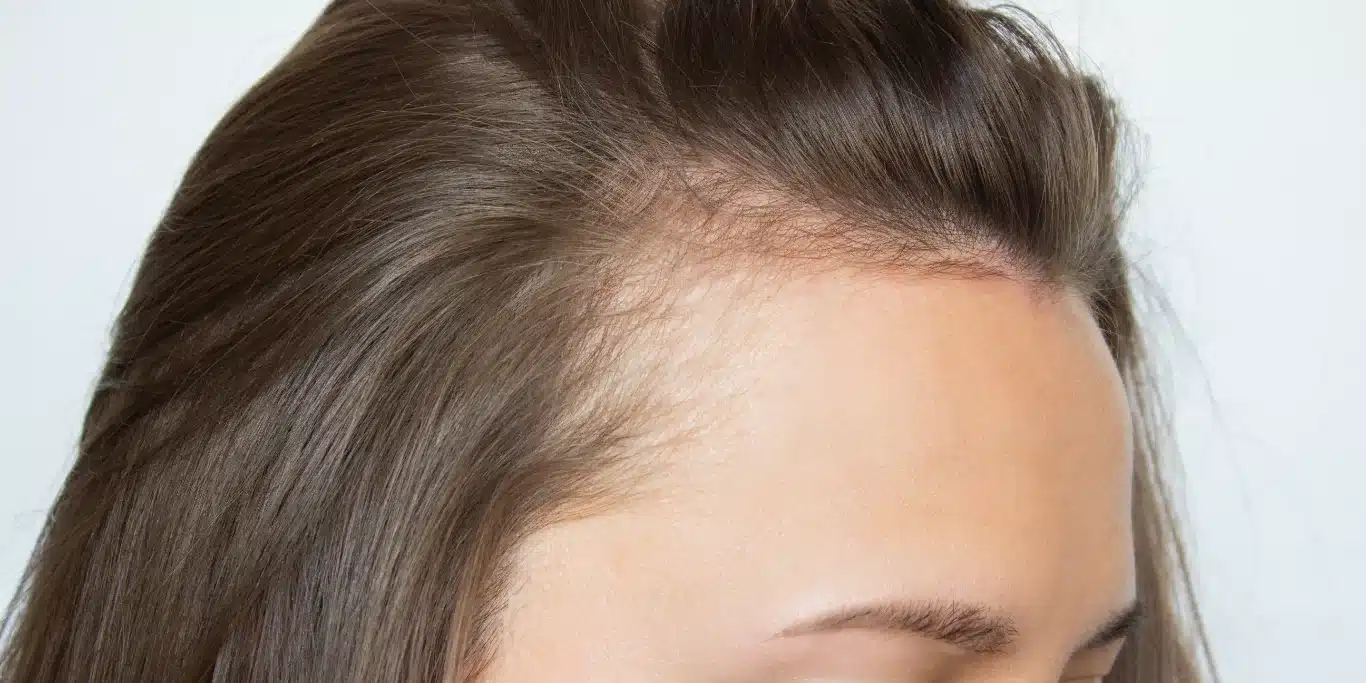
The hairline has an important influence on how the forehead and face are framed. Its height, shape, density, and relationship to the brows can affect overall facial proportions and how someone perceives their appearance.
For some transgender and gender-diverse individuals, changing the hairline can be a meaningful part of aligning their outward appearance with their gender identity. Hairline lowering surgery—also known as forehead reduction or surgical hairline advancement—can move an appropriately positioned hair-bearing scalp forward to reduce forehead height and establish a new frontal hairline.
Gender-affirming treatment is personal, and no individual procedure is necessary to validate someone’s identity. At Dr. Demetri Hair Restoration in Tampa, double board-certified facial plastic surgeon Dr. Demetri Arnaoutakis develops each treatment plan around the patient’s anatomy, preferences, and individual goals.
Because Dr. Demetri performs both hairline lowering surgery and FUE hair transplantation, he can help patients understand which approach—or combination of procedures—may be most appropriate for changing the position, shape, or density of their hairline.
How Can the Hairline Affect Facial Framing?
A hairline is not simply the point where forehead skin meets scalp hair. Its position and contour establish the upper boundary of the face and influence how the forehead relates to the brows, temples, and other facial features.
Someone may be bothered by:
- A naturally high hairline
- A forehead that appears long relative to other facial features
- Temporal recessions at the outer edges of the hairline
- A hairline shape that does not reflect their personal goals
- Reduced density along the frontal hairline
- Changes caused by previous hair loss
- A combination of hairline height, shape, and density concerns
There is no single “correct” hairline for any gender. Gender-affirming hairline treatment should not impose a standardized design or assume that every patient wants the same facial characteristics. The objective is to understand how the individual wants their face to be framed and determine whether surgery can safely create that change.
What Is Gender-Affirming Hairline Lowering Surgery?
Hairline lowering surgery advances the patient’s existing hair-bearing scalp toward the forehead. During the procedure, Dr. Demetri places an incision along the frontal hairline, mobilizes the scalp, removes the appropriate amount of forehead skin, and secures the hairline in its planned position.
One advantage of surgical hairline advancement is that the result is visible immediately. At Dr. Demetri Hair Restoration, the procedure generally takes approximately 90 minutes and is typically performed under general anesthesia.
In appropriately selected patients, Dr. Demetri may be able to advance the hairline approximately 2–4 centimeters. However, the amount of lowering that can be safely achieved varies. Scalp flexibility, hairline stability, hair density, forehead anatomy, previous procedures, and other individual factors all influence the surgical plan.
Hairline Lowering Surgery vs. FUE Hair Transplantation
Hairline lowering surgery and FUE transplantation can both create the appearance of a lower hairline, but they accomplish that goal differently.
Hairline lowering surgery:
A surgical procedure that moves the existing hair-bearing scalp forward. It can create a significant and immediate reduction in forehead height when the patient has adequate scalp flexibility and stable hair growth.
FUE hair transplantation
FUE, also referred to as follicle unit extraction relocates individual follicles from a donor area—typically along the back or sides of the scalp—to planned sites around or in front of the existing hairline. It does not move the scalp. Instead, it gradually establishes a new hairline as the transplanted follicles begin producing hair.
FUE may provide greater flexibility for adjusting hairline shape, filling the temporal areas, increasing frontal density, or creating subtle irregularities that make the hairline look natural. However, results develop gradually and depend on the availability of sufficient healthy donor follicles.
Some patients benefit from combining the procedures. Hairline lowering surgery may first advance the existing hairline, followed several months later by FUE transplantation to increase density, refine the contour, or help camouflage the surgical scar. Because Dr. Demetri performs both procedures, the recommendation does not have to be limited by the capabilities of a single technique.
Why Scalp Flexibility and Hair Stability Matter in Hairline Procedures
Not everyone who wants a lower hairline is a candidate for hairline advancement surgery.
The scalp must have sufficient flexibility to move forward without excessive tension. During consultation, Dr. Demetri evaluates scalp mobility to estimate how much advancement may be safely possible.
The stability of the existing hair is equally important. Hairline lowering surgery places the incision along the frontal edge of the hair-bearing scalp. If hair loss later progresses behind that incision, the scar could become more visible.
Patients with active or significant hair thinning may therefore be better candidates for FUE transplantation, nonsurgical hair-loss treatment, or further evaluation before considering hairline lowering surgery. Treatment planning should account not only for the desired appearance today but also for how the surrounding hair may change over time.
How Does Dr. Demetri Design a Gender-Affirming Hairline?
Successful hairline design involves more than selecting a lower position. As a double board-certified facial plastic surgeon with fellowship training in facial plastic and reconstructive surgery, Dr. Demetri evaluates the hairline within the context of the patient’s overall facial anatomy.
His experience in facial aesthetics and reconstruction informs both the appearance and technical planning of the new hairline. He considers how changes in height, shape, and temporal contour will relate to the forehead, brows, and surrounding features while also evaluating the scalp and hair characteristics that influence surgery and healing.
Planning may consider:
- Current forehead height and facial proportions
- Desired degree of hairline lowering
- Overall hairline shape and temporal contour
- Natural direction and pattern of hair growth
- Scalp flexibility
- Hair density and shaft characteristics
- Current or potential future hair loss
- Incision placement and scar concealment
- Whether FUE could refine the shape or increase density
- The patient’s preferences and gender-expression goals
The objective is not to create an exaggerated or formulaic hairline. Dr. Demetri designs each hairline to complement the patient’s features, appear natural as it heals, and reflect how the individual wants their face to be framed.
Who May Be a Candidate for Gender-Affirming Hairline Lowering?
Hairline lowering surgery may be considered by transgender, nonbinary, or gender-diverse adults who want to reduce the visible height of the forehead by advancing their existing hairline.
Potential candidates generally have:
- A naturally high but stable hairline
- Sufficient scalp flexibility for meaningful advancement
- Adequate hair density along the frontal scalp
- No significant active or progressive hair loss
- A clear understanding of the incision and resulting scar
- Good general health for elective surgery
- Realistic expectations regarding the achievable change
- A personal desire for treatment rather than pressure from others
Candidacy is not determined by whether someone has reached a particular stage of transition or undergone other gender-affirming treatments. Dr. Demetri evaluates the physical factors relevant to surgery while listening carefully to what each patient wants to change.
FAQs About Gender-Affirming Hairline Surgery
What Is Recovery Like After Hairline Lowering Surgery?
Patients may generally shower approximately 48 hours after surgery using mild hair products and following the specific instructions provided by the practice. Sutures are typically removed at an appointment about seven days after the procedure.
During recovery, patients should avoid:
- Pulling, rubbing, or placing unnecessary tension on the incision
- Using a hair dryer until cleared by Dr. Demetri
- Hair coloring for approximately two months
- Direct sun exposure to the healing incision
- Activities restricted in their individualized postoperative instructions
The hairline is lower immediately, although swelling and healing initially affect its appearance. The result generally becomes easier to appreciate over approximately six weeks as the tissues settle.
Is hairline lowering surgery only for women?
No. Candidacy is determined by anatomy, scalp flexibility, hair stability, health, and treatment goals—not by gender. Hairline lowering can be considered by any appropriately selected adult who wants to reduce forehead height by advancing the existing hairline.
How much can Dr. Demetri lower my hairline?
Dr. Demetri is often able to lower the hairline by approximately 2–4 centimeters in suitable candidates. The amount varies according to scalp flexibility, forehead anatomy, hair density, incision tension, and the position of the existing hairline. A consultation is necessary to estimate what may be safely achievable for you.
Will hairline lowering surgery leave a scar?
Hairline lowering requires an incision along the frontal hairline, so a scar is expected. Dr. Demetri carefully plans the incision so it follows the hairline, and hair may grow through and around the area as it heals. Scarring varies among patients. FUE transplantation may later be used to add density and help camouflage the incision when appropriate.
Can FUE create a more customized hairline shape?
Yes. Because FUE places individual follicles in planned locations, it can be used to refine the shape of the frontal hairline, soften its border, fill temporal recessions, increase density, or help disguise a surgical scar. The final result depends on donor-hair availability and careful control of graft direction, angle, spacing, and distribution.
Can I combine hairline lowering with other gender-affirming facial procedures?
Hairline lowering may sometimes be coordinated with other facial procedures when medically appropriate. Whether procedures should be combined or staged depends on the operations being considered, anesthesia requirements, overall health, and recovery needs. Dr. Demetri can discuss the role of hairline treatment within your broader goals without assuming that additional procedures are necessary.
What if I am experiencing hair loss?
Active or progressive hair loss can affect candidacy because future thinning may reveal the hairline incision or alter the result. Dr. Demetri will evaluate your frontal hairline, scalp, and potential donor areas before recommending surgery. Depending on the pattern and cause of hair loss, FUE transplantation, nonsurgical treatment, medical evaluation, or continued observation may be more appropriate.
Is gender-affirming hairline lowering covered by insurance?
Coverage varies considerably among insurance plans. Some policies may classify hairline surgery as cosmetic, while others may evaluate gender-affirming procedures according to their individual coverage criteria and documentation requirements. Contact your insurer directly to ask about benefits, exclusions, prior authorization, and required documentation. Dr. Demetri Hair Restoration can provide current information about practice pricing and available payment options.
Explore Gender-Affirming Hairline Lowering in Tampa, FL
Changing the height or shape of the hairline can meaningfully affect facial framing, but the right approach is different for every patient. Some may benefit from advancing the existing hairline, others from transplanting individual follicles, and some from combining the techniques in stages.
Dr. Demetri is one of the few facial plastic surgeons in the country who performs both hairline lowering surgery and FUE hair transplantation. This allows him to evaluate the full range of surgical options rather than approaching every hairline concern with a single procedure.
If you are considering hairline lowering as part of your gender-affirming care, contact Dr. Demetri Hair Restoration in Tampa or call 813-603-3110 to schedule a personalized consultation.